Seasickness
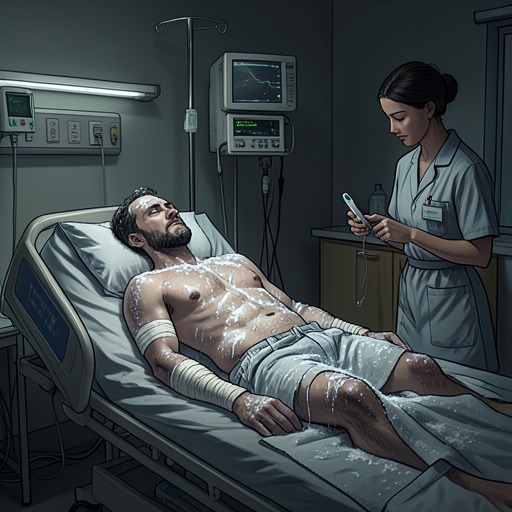
Not Without HopeSeasickness is the debilitating condition that overtakes Nick Schuyler during the February 28, 2009 fishing trip aboard Marquis Cooper’s fishing boat. It begins in rough water west of Clearwater Pass as dizziness, warmth, dry mouth, and stomach distress, then progresses to repeated vomiting and an inability to retain food or water. In the larger survival narrative, seasickness is more than an unpleasant interruption to fishing: it weakens Nick before the boat overturns, exposes the limits of athletic toughness, and paradoxically contributes to his survival because his illness leads him to put on layers that later slow the loss of body heat.
Onset in Rough Water
Seasickness develops after the four men enter the Gulf in conditions markedly worse than those of the previous week. The boat encounters five- or six-foot seas, waves arriving from multiple directions, repeated pounding, and an anchor that will not hold. Nick changes seats, tries standing to absorb the motion with his legs, and abandons salted sunflower seeds and beer as his body begins to react. He had been warned to take Dramamine, with the caution that once sickness began it would not improve, but because he had felt fine on the earlier trip he ignored the advice.
The physical sequence is sharply rendered: Nick feels dizzy and warm, his mouth dries, he spits repeatedly, and his stomach turns. The rough water makes even drinking difficult; beer foams and spills, while the constant jolting prevents him from settling into a stable position. Marquis Cooper refuses to turn back merely because someone becomes sick, treating the illness within the group’s athletic culture as something to endure rather than a reason to abandon the trip.
Vomiting and Physical Decline
As the waves continue, Nick’s nausea intensifies. The others first tease him and tell him to endure it, then acknowledge that he looks unwell. He vomits the food he has eaten, including cereal, peanut butter and jelly, bread, and pretzels. The episode leaves him too sick to fish effectively, even when a fish is hooked; he must hand the rod to Will Bleakley and lie across the bow.
Nick’s inability to keep anything down becomes increasingly dangerous when the trip turns into a maritime emergency. He tries to eat peanuts and a sandwich because hunger and headache seem as though they might improve if he puts food in his stomach, but he cannot retain even water. By the time the men decide to leave the fishing site, he is wearing nearly everything he brought, including sweatpants, gloves, a skullcap, and shoes, while his orange winter jacket is initially damp after sitting in a puddle on the boat. The seas have grown to roughly seven feet, and the group is already exhausted before the attempt to free the anchor leads to the boat’s capsizing.
Seasickness also separates Nick from the others in practical terms. He is physically unable to help much with the anchor or later emergency efforts, and he is frightened when Marquis Cooper and Will Bleakley fail to dive beneath the overturned boat. His admission that he cannot try is one of the first occasions on which he says no without first attempting a challenge. The illness therefore becomes part of a broader collapse in the men’s assumptions that strength, swimming ability, and determination will automatically control the situation.
From Motion Sickness to Survival Risk
After the capsizing, seasickness is no longer an isolated reaction to the boat’s movement. Vomiting, salt-water exposure, cold, exhaustion, and the lack of dependable food or drinking water combine into a wider physiological crisis. The book explains that swallowing large amounts of seawater can produce a dangerous sodium imbalance, draw water from the body’s cells, and lead to delirium, seizures, cardiac failure, and death from dehydration. Nick’s earlier vomiting leaves him especially conscious of the danger of having nothing left in his stomach and later drives his urgent search for food and water beneath the hull.
The same narrative distinguishes ordinary seasickness from the later confusion caused by cold and dehydration. Marquis Cooper begins slurring and rambling after prolonged exposure, while Corey Smith becomes unresponsive and physically frantic in the water. Will Bleakley eventually shows similar slurred, backward-sounding speech. These episodes are not presented as simple decisions to give up; the medical explanation attributes them to hypothermia, delirium, and physiological deterioration. Seasickness is thus the opening bodily warning in a chain that moves from nausea to depletion, from depletion to altered behavior, and from altered behavior to fatal vulnerability.
Paradoxical Advantage
The illness has an unexpected protective consequence. Because Nick is seasick and cold, he puts on a sweatshirt and winter jacket, unlike the other men, who enter the water with less protection. His jacket is water-resistant and somewhat insulated, and Nick later identifies it as essential to his survival. While clinging to the overturned boat, he repeatedly recognizes that the clothing has slowed his exposure to the cold; medical observers likewise conclude that the extra layers probably reduced his rate of heat loss.
Nick’s physical condition is otherwise not obviously favorable. He has little body fat, which provides little insulation, and the men are all young, fit, and similarly built. Dr. Mark Rumbak explains that high fitness may help a person push through pain, but a muscular body can also weigh more in the water and provide less flotation. In this context, seasickness becomes an ironic turning point: the symptom that weakens Nick before the accident also causes him to dress warmly enough to outlast the others.
Memory and Meaning After Rescue
The memory of seasickness remains active after Nick’s rescue. At Will Bleakley’s funeral, surrounded by people thanking him for holding on and for being with Will until the end, Nick experiences the same nauseous sensation he had felt on the boat. The bodily response links the public ceremony to the original ordeal and shows that the disaster continues through involuntary physical recurrence, not only conscious recollection.
Nick later describes himself as grateful that he became sick and therefore had all his clothes on. He also credits Will’s retrieval of life jackets, Gatorade, and pretzels, and even regards the boat’s construction as part of the chain of circumstances that allowed him to live. Seasickness consequently occupies an ambivalent place in the account. It represents vulnerability, humiliation, and loss of control, yet it also becomes one of the accidental conditions that preserved Nick’s body long enough for rescue. The state that seemed to make him the weakest member of the fishing party ultimately helped determine who survived.